Trans-Regional Echoes of Resistance: A Sociolinguistic Reading of Gendered Agency in E. Rokajat Asura’s Raden Dewi Sartika and its Parallelisms in Acehnese Female Discourse
DOI:
https://doi.org/10.63924/joas.v3i2.142Keywords:
Colonial diglossia, Female agency, Literary sociolinguistic framework, Aceh, Trans-regional resistanceAbstract
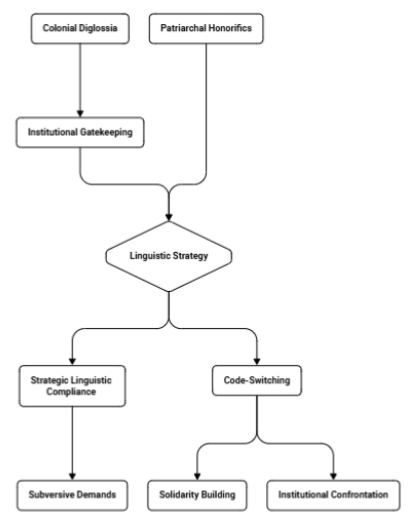
The turn of the twentieth century in the Dutch East Indies was characterized by a rigid colonial diglossia and deeply entrenched indigenous patriarchal structures that severely gatekept formal education from women. While traditional scholarship evaluates early feminist movements through isolated socio-historical or biographical lenses, this study addresses a distinct research gap by exploring the trans-regional sociolinguistic dimensions of female resistance. The primary objective is to investigate how language variation, stratified honorifics, and institutional registers are deployed as instruments of defiance in E. Rokajat Asura’s biographical novel Raden Dewi Sartika, drawing conceptual parallelisms with historical Acehnese female discourse. Utilizing a qualitative literary-sociolinguistic framework grounded in Dell Hymes’ ethnography of communication and Mikhail Bakhtin’s heteroglossia, this research evaluates dialogue sequences and narrative prose at a fine granularity. The findings reveal that characters strategically manipulate formal, elite registers and indigenous honorific systems to maintain surface-level compliance while successfully executing subversive institutional demands. This micro-linguistic negotiation directly parallels the historical socio-political discourse of aristocratic female figures in Aceh who appropriated customary speech to command authority. Ultimately, this study demonstrates that early Indonesian female agency relied on the tactical mastery of existing linguistic hierarchies to subvert oppression. These insights offer a novel trans-regional model that enriches the academic understanding of language, gender, and institutional autonomy across the shared socio-cultural landscape of Aceh and the wider Indonesian archipelago.
References
Aan, A., & Lestari, S. (2024). The influence of Cut Nyak Dhien on nationalism and patriotism during the Aceh War (1850-1908). Journal of Social Studies and Science Research, 5(1), 168–185.
Al-Quaderi, G. G., & Al-Mahrooqi, R. (2021). Subaltern agency and linguistic dual-literacy in postcolonial fiction: A critical evaluation. Journal of Postcolonial Writing, 57(4), 482–496. https://doi.org/10.1080/17449855.2021.1943204
Amrullah, M. K., & Rahman, F. (2024). Trans-regional resistance in modern Indonesian literature: Comparative analysis of local agencies against institutional patriarchy. Journal of Indonesian Literary and Cultural Studies, 8(1), 14–32.
Bakhtin, M. M. (1981). The dialogic imagination: Four essays (M. Holquist, Ed.; C. Emerson & M. Holquist, Trans.). University of Texas Press.
Blackburn, S. (2020). The Indonesian women’s movement: A historical overview of gender and power in Southeast Asia (2nd ed.). Oxford University Press.
Blommaert, J. (2020). Sociolinguistics and stratifications: An essay on language and inequality. Cambridge University Press. https://doi.org/10.1017/9781108884242
Bodden, M. H. (2021). Re-imagining the past, resisting the present: Biographical fiction and historical memory in contemporary Indonesian women's writing. Journal of Southeast Asian Studies, 52(3), 412–435. https://doi.org/10.1017/S002246342100067X
Budiman, A., & Wahyudi, T. (2022). Negotiating conservative spaces: The representation of Dewi Sartika’s educational resistance in contemporary Indonesian novels. K@ta Kita: Journal of Language, Literature, and Culture, 10(2), 185–198.
Busch, B. (2021). Heteroglossia and the linguistic repertoire: Moving beyond monolingual frameworks in literary analysis. Language and Communication, 78, 43–55. https://doi.org/10.1016/j.langcom.2021.02.002
De Groot, J. (2020). The historical novel (2nd ed.). Routledge.
Errington, J. (2018). Linguistics in a colonial world: A story of language, meaning, and power. Wiley-Blackwell.
Eshraghi, A., & Zainal, Z. (2023). Flawless compliance, internal subversion: Linguistic agency in non-Western feminist literary texts. GEMA Online® Journal of Language Studies, 23(2), 115–131. https://doi.org/10.17576/gema-2023-2302-07
Feener, R. M., Kloos, D., & Samuels, A. (2021). Islam, gender, and authority in Southeast Asia: Transregional perspectives. Palgrave Macmillan. https://doi.org/10.1000/978-3-030-71793-3
Graf, A., & Srimulyani, E. (Eds.). (2023). Acehnese women across eras: Agency, identity, and the negotiation of Islamic law. Routledge. https://doi.org/10.4324/9781003343516
Hidayatullah, S., Pradopo, R. T., & Zubaidah, S. (2021). The westernization of gender equality: Critical discourse on early feminist representations in Indonesian high school literary textbooks. Jurnal Pendidikan Bahasa dan Sastra, 21(2), 189–204. https://doi.org/10.17509/bs_jpbsp.v21i2.36541
Inayati, N., & Widodo, H. P. (2022). Language, gender, and education in colonial Indonesia: A critical discourse analysis of early women’s writings. Journal of Language and Politics, 21(4), 589–612. https://doi.org/10.1075/jlp.21012.ina
Jeffries, L., & McIntyre, D. (2019). Critical stylistics: The power of English text. Palgrave Macmillan.
Kurnia, A., & Setiawan, B. (2022). De-indigenizing the subaltern: A critical review of radical rupture narratives in Indonesian historical novels. Horison: Jurnal Ilmu Susastra, 9(1), 54–68.
Locher-Scholten, E. (2000). Women and the colonial state: Essays on gender and modernity in the Netherlands Indies 1900-1942. Amsterdam University Press.
Martina, S., Haryono, T., & Wijaya, A. (2025). Colonial legacies and postcolonial agendas: Gender, structural barriers, and education in early Indonesia. Indonesian Journal of Historical Studies, 12(1), 45–62.
Mesthrie, R. (Ed.). (2021). The Cambridge handbook of sociolinguistics (2nd ed.). Cambridge University Press. https://doi.org/10.1017/9781108579315
Moriyama, T. (2024). Sundanese, Javanese, and Dutch: The trilingual dilemma and diglossia in late colonial literature of the Netherlands East Indies. Bijdragen tot de Taal-, Land- en Volkenkunde / Journal of the Humanities and Social Sciences of Southeast Asia, 180(1), 34–61. https://doi.org/10.1163/22134379-bja10057
Mulyadi, A., & Setiawan, H. (2023). Retrospective reconstruction and anachronism in contemporary Indonesian biofiction. Poetika: Jurnal Ilmu Sastra, 11(1), 74–88. https://doi.org/10.22146/poetika.v11i1.82145
Nunning, A. (2021). Fictional metahistory and discourse engineering: How contemporary novels reshape collective memory. Journal of Literary Theory, 15(2), 201–218. https://doi.org/10.1515/jlt-2021-2015
Pennycook, A. (2021). Critical applied linguistics: A critical introduction (2nd ed.). Routledge. https://doi.org/10.4324/9781003091172
Putra, R. M. (2023). Education of patriotism values through poetry: The heroic journey of Cut Nyak Dien. Journal of Language, Literature, and History Education, 11(2), 89–104.
Rizqi, A. F., & Subekti, H. (2022). Dewi Sartika and Sakola Kautamaan Istri: Driving female empowerment through vocational and formal literacy in West Java. Paramita: Historical Studies Journal, 32(2), 210–221. https://doi.org/10.15294/paramita.v32i2.34210
Sari, D. P., Zeehandelaar, S., & Utami, T. (2023). Relational dialectics of women's identity in the colonial era: A critical discourse analysis of early feminist movements. Electronic Journal of Education, Social Economics and Technology, 4(2), 112–125. https://doi.org/10.33122/ejeset.v4i2.98
Simpson, P. (2023). Stylistics: A resource book for students (3rd ed.). Routledge.
Srimulyani, E. (2021). Women, vernacularization, and the negotiation of colonial modernity in early 20th-century Indonesian novels. Southeast Asian Studies, 10(2), 245–267. https://doi.org/10.20495/seas.10.2_245
Srimulyani, E., Yusuf, S., & Rahmawati, I. (2022). Subverting the codes: A comparative sociolinguistic analysis of female agency in regional Indonesian literature. Gadjah Mada Journal of Humanities, 34(2), 145–161.
Stoler, A. L. (2022). Along the archival grain: Epistemic anxieties and colonial common sense (2nd ed.). Princeton University Press.
Subet, M. F., Rahman, A. A., & Ahmad, N. (2023). Sociolect shifts and micro-linguistic resistance in postcolonial literature: A critical discourse analysis approach. Journal of Language and Linguistic Studies, 19(2), 411–428.
Sufi, R., & Syam, H. (2021). Honorific titles and social stratification in Acehnese society: A historical socio-linguistic review. Journal of Aceh Historical and Cultural Studies, 6(2), 112–127.
Suyitno, S. (2020). Sastra dan rekonstruksi sejarah bangsa: Menakar bias modernitas dalam kritik sastra lokal. UNS Press.
Todorov, P., & Atanasova, M. (2024). Linguistic sensibilities in modern historical prose: Representation vs. historical record. Language and Literature, 33(3), 312–329. https://doi.org/10.1177/09639470241234567
Vice, S. (2021). Introducing Bakhtin (2nd ed.). Routledge.
Wardani, N. E. (2023). Binary oppositions in colonial literature criticism: The myth of the purely Westernized Indonesian heroine. Litera: Jurnal Penelitian Bahasa, Sastra, dan Pengajarannya, 22(3), 302–317. https://doi.org/10.21831/ltr.v22i3.61245
Wardatun, A., & Srimulyani, E. (2021). Deconstructing patriarchal structures: Women, islamic education, and social changes in early 20th-century Netherlands East Indies. Studia Islamika, 28(3), 511–534. https://doi.org/10.36712/sdi.v28i3.22140
Wiyatmi, W., Suryaman, M., & Esten, M. (2023). Gynocriticism and historical trauma: How contemporary Indonesian novels reconstruct early female emancipators. International Journal of Humanity Studies, 7(1), 54–69. https://doi.org/10.24071/ijhs.v7i1.5987
Published
How to Cite
Issue
Section
License
Copyright (c) 2026 Ruth Angel Manurung, Rosmawaty Harahap

This work is licensed under a Creative Commons Attribution-ShareAlike 4.0 International License.
Most read articles by the same author(s)
- Nur Frety Soumena, Rosmawaty Harahap, Improving the Quality of Merdeka Curriculum Through Local Wisdom Based on Literary Works , Journal of Aceh Studies: Vol. 2 No. 1 (2025): Journal of Aceh Studies: January
- Fonti Fai Banjarnahor, Rosmawaty Harahap, Reframing Women’s Educational Leadership in Aceh: Rereading Fatmawati Soekarno through Sociohistorical Perspectives , Journal of Aceh Studies: Vol. 3 No. 1 (2026): Journal of Aceh Studies: January
- Gracesela Septiana Sibuea, Rosmawaty Harahap, Dynamics of Resistance to The Poetry “A Jacket Stained with Blood” by Taufiq Ismail , Journal of Aceh Studies: Vol. 3 No. 1 (2026): Journal of Aceh Studies: January
- Reni Wati Br Sagala Sagala, Rosmawaty Harahap, Claiming the Republic: A Semiotic Analysis of Ownership and Citizenship in Taufik Ismail’s Poetry , Journal of Aceh Studies: Vol. 3 No. 1 (2026): Journal of Aceh Studies: January
- Jesika Lolo Karina Manik, Rosmawaty Harahap, Character Formation through Traditional Acehnese Rhymes: A Stylistic Analysis of Moral Meaning , Journal of Aceh Studies: Vol. 3 No. 1 (2026): Journal of Aceh Studies: January
- Monica Monalisa Hutabarat, Rosmawaty Harahap, Stylistics of Moral Resilience: Recontextualizing Oral Poetry for Youth Character Education in Aceh Society , Journal of Aceh Studies: Vol. 3 No. 2 (2026): Journal of Aceh Studies: July
- Sheshilia Putri Damanik, Rosmawaty Harahap, Socio-Aesthetic Realignment and Regional Heroism: Tracing the Resonance of Aceh’s Cultural Identity in the Poetics of Angkatan 45 , Journal of Aceh Studies: Vol. 3 No. 2 (2026): Journal of Aceh Studies: July

.png)

.png)
.png)
.png)
.png)
.png)
.png)
.png)
.png)
.png)
.png)
.png)
.png)
.png)
.png)
.png)
.png)


.png)
.png)