Driving Elementary Digital Literacy: Technology-Based Principal Leadership in Resource-Constrained Schools
DOI:
https://doi.org/10.63924/jsid.v8i1.352Keywords:
Principal Leadership, Digital Management, Digital Literacy, Primary Education, Educational TechnologyAbstract
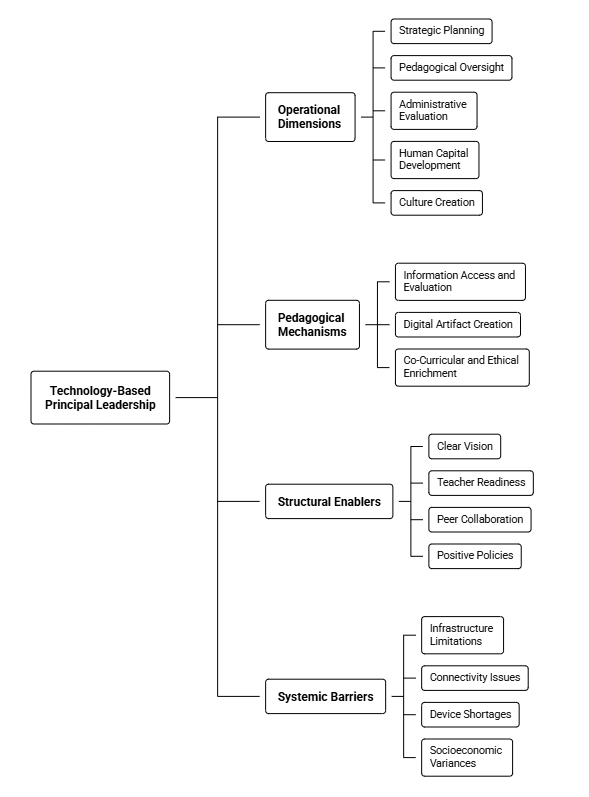
The imperative for digital transformation within primary education has highlighted the strategic role of educational leadership in driving technological integration and cultivating student competencies. However, empirical understanding of how technology-focused principal management directly fosters foundational digital literacy among elementary students in resource-constrained contexts remains limited. This study examined the operationalization of technology-based principal leadership management and evaluated its direct role in strengthening student digital literacy at SDN Lalosabila. Utilizing a qualitative single-case study design, empirical data were gathered through semi-structured interviews, non-participant classroom observations, and institutional document analysis involving the school principal, instructional staff, and elementary students. Data was processed iteratively using thematic analysis coupled with method and source triangulation to ensure analytical rigor. The findings demonstrate that technology-driven principal leadership operates across five core operational dimensions: strategic planning, pedagogical oversight through e-supervision, administrative evaluation, human capital development, and culture creation. Furthermore, principal-led initiatives catalyzed a transition from passive technology consumption to active engagement, enhancing student digital literacy across technical, cognitive, and ethical domains. Nevertheless, systemic barriers, including internet bandwidth fluctuations and device shortages, continue to constrain optimal implementation. This study concludes that transformational, adaptive digital leadership is essential for bridging digital divides in primary education. Practically, the results offer actionable frameworks for educational administrators seeking to optimize digital infrastructure, design continuous teacher mentoring programs, and build resilient, ethically grounded digital learning cultures in emerging educational environments.
References
Abdurrohman, M. A., & Hidayati, D. (2024). School principals managerial leadership strategies in increasing students’ digital literacy. IJORER: International Journal of Organization, Innovation & Entrepreneurship Research, 5(4), 622–635.
Abu, A., Alhabsyi, F., Ruslin, R., Syam, H., Arman, M., Suktomansyah, A. M., & Mudaimin, M. (2025). Digital Islamic education learning in secondary schools: Educational quality and student engagement. EDUKASIA: Jurnal Pendidikan dan Pembelajaran, 6(1), 112–128.
Akram, H., Abdelrady, A. H., Al-Adwan, A., & Ramzan, M. (2022). Teachers’ perceptions of technology integration in teaching-learning practices: A systematic review. Frontiers in Psychology, 13, Article 840386.
Alajmi, M. (2022). The impact of digital leadership on teachers’ technology integration during the COVID-19 pandemic in Kuwait. International Journal of Educational Research, 112, Article 101928.
Alieto, E. O., Abequibel-Encarnacion, B., Estigoy, E. B., Balasa, K. A., Eijansantos, A. M., & Torres-Toukoumidis, Á. (2024). Teaching inside a digital classroom: A quantitative analysis of attitude, technological competence and access among teachers across subject disciplines. Heliyon, 10(4), Article e25810.
Audrin, C., & Audrin, B. (2022). Key factors in digital literacy in learning and education: A systematic literature review using text mining. Education and Information Technologies, 27(6), 7395–7419.
Basuki, A., Susilowati, E., Umatin, C., Wardoyo, C., & Andayani, E. S. (2024). Literature study on problems of office management vocational school teachers in implementing learning technology. International Education Trend Issues, 2(1), 33–42.
Berkovich, I., & Hassan, T. (2023). Principals’ digital transformational leadership, teachers’ commitment, and school effectiveness. Education Inquiry, 16(2), 177–194.
Devisa, M., Matin, M., & Ahmad, M. (2023). Improving teacher digital literacy competence through principal leadership. EDUTEC: Journal of Education and Technology, 6(4), 891–904.
Hidayat, R., & Patras, Y. (2024). Digital leadership of school principals in Indonesia: Strategic interventions needed. Pedagogia: Jurnal Ilmiah Pendidikan, 16(2), 101–115.
Jordan, A., Julianto, A., & Firmansyah, M. A. (2025). Integrating digital literacy into curriculum design: A framework for 21st century learning. Journal of Technology, Education & Teaching, 3(1), 12–25.
Kalyani, L. K. (2024). The role of technology in education: Enhancing learning outcomes and 21st century skills. International Journal of Scientific Research in Modern Science and Technology, 3(2), 15–24.
Karakose, T., Polat, H., & Papadakis, S. (2021). Examining teachers’ perspectives on school principals’ digital leadership roles and technology capabilities during the COVID-19 pandemic. Sustainability, 13(23), Article 13448.
Luo, H., Sun, D., Zhang, L., Wiyono, B., Imron, A., Rahma, L., Arifah, N., Azhari, R., Elfira, Sibula, I., & Maharmawan, M. A. (2024). Elevating teachers’ professional digital competence: Synergies of principals’ instructional e-supervision, technology leadership and digital culture for educational excellence in digital-savvy era. Education Sciences, 14(3), Article 266.
Mushadi, M., Usman, N., & Bahrun, B. (2025). Empowering teachers in the digital age: Leadership strategies for enhancing pedagogic competencies in high schools. Journal of Educational Management and Learning, 3(1), 50–63.
Ofita, C., Komariah, A., & Abubakar, A. (2024). Assessing digital leadership of junior high school principals. Journal of Educational Management and Instruction (JEMIN), 4(1), 22–35.
Purnama, S., Ulfah, M., Machali, I., Wibowo, A., & Narmaditya, B. S. (2021). Does digital literacy influence students’ online risk? Evidence from COVID-19. Heliyon, 7(6), Article e07406.
Reddy, P., Chaudhary, K., & Hussein, S. (2023). A digital literacy model to narrow the digital literacy skills gap. Heliyon, 9(4), Article e14878.
Robandi, B., Setiawardani, W., & Apriyanto, A. (2025). Factors influencing the pedagogical competence of elementary school teachers in the digital era: A survey study. Journal of General Education and Humanities, 4(1), 77–91.
Ruloff, M., & Petko, D. (2021). School principals’ educational goals and leadership styles for digital transformation: Results from case studies in upper secondary schools. International Journal of Leadership in Education, 28(3), 422–440.
Sajidan, S., Atmojo, I. R. W., Desstya, A., Parmin, P., Saputri, D. Y., & Salimi, M. (2023). The level of digital literacy ability of elementary school students. World Journal on Educational Technology: Current Issues, 15(2), 210–222.
Schmitz, M.-L., Antonietti, C., Consoli, T., Cattaneo, A. A. P., Gonon, P., & Petko, D. (2023). Transformational leadership for technology integration in schools: Empowering teachers to use technology in a more demanding way. Computers & Education, 204, Article 104880.
Suwarto, D. H., Setiawan, B., & Machmiyah, S. (2022). Developing digital literacy practices in Yogyakarta elementary schools. Electronic Journal of e-Learning, 20(3), 245–258.
Swales, J. M. (2004). Research genres: Explorations and applications. Cambridge University Press.
Timotheou, S., Miliou, O., Dimitriadis, Y., Sobrino, S. V., Giannoutsou, N., Cachia, R., Martínez Monés, A., & Ioannou, A. (2022). Impacts of digital technologies on education and factors influencing schools’ digital capacity and transformation: A literature review. Education and Information Technologies, 28(6), 6695–6726.
Yang, Q., Alias, B., & Mohd Nor, M. Y. (2025). Principals’ technology leadership and teachers’ ICT integration: A systematic review on capacity building for quality improvement and sustainable education. International Journal of Learning, Teaching and Educational Research, 24(1), 88–109.
Yasa, A. D., Rahayu, S., Handayanto, S. K., & Ekawati, R. (2024). Evaluating the impact of smart learning-based inquiry on enhancing digital literacy and critical thinking skills. Ingénierie des Systèmes d’Information, 29(1), 101–112.
Zeng, M., Cheah, K. S. L., & Abdullah, Z. (2025). The influence of school principals’ digital leadership on teachers’ competency in integrating artificial intelligence: A systematic thematic review. Frontiers in Education, 10, Article 1421001.
Zou, Y., Kuek, F., Feng, W., & Cheng, X. (2025). Digital learning in the 21st century: Trends, challenges, and innovations in technology integration. Frontiers in Education, 10, Article 1410112.
Published
How to Cite
Issue
Section
License
Copyright (c) 2026 Annisa Ilmeira Queen, Aspin Aspin, Ishak Bagea, Feni Febrianti, Ainul Basyirah

This work is licensed under a Creative Commons Attribution-ShareAlike 4.0 International License.
Similar Articles
- Aurel Isma Wardani, Aspin Aspin, Abubakar Abubakar, Feni Febrianti, Ainul Basyirah, Smart School Leadership in Resource-Constrained Primary Education: An Empirical Case Study of Digital Transformation , Journal of Society Innovation and Development: Vol. 8 No. 1 (2026): JSID: November 2026
- Firman Firman, Ishak Bagea, Aspin Aspin, Abubakar Abubakar, Feni Febrianti, Bridging the EdTech Divide Under Resource Constraints: How a Rural Principal Navigated Resource Scarcity to Elevate Learning Quality , Journal of Society Innovation and Development: Vol. 8 No. 1 (2026): JSID: November 2026
You may also start an advanced similarity search for this article.
Most read articles by the same author(s)
- Feni Febrianti, Muh Ainul Basyirah, Implementing Learning-Based Models to Enhance Reading Comprehension Skills in Elementary School Students , Journal of Society Innovation and Development: Vol. 4 No. 1 (2022): JSID: November 2022
- Feni Febrianti, Anisa Ainul Mardiah, May Yati, Badrun Islma, Siti Julaika, Culturally Responsive Pedagogy in Primary Education: Leveraging Bima Local Wisdom to Foster Student Learning Independence , Journal of Society Innovation and Development: Vol. 8 No. 1 (2026): JSID: November 2026
- Aurel Isma Wardani, Aspin Aspin, Abubakar Abubakar, Feni Febrianti, Ainul Basyirah, Smart School Leadership in Resource-Constrained Primary Education: An Empirical Case Study of Digital Transformation , Journal of Society Innovation and Development: Vol. 8 No. 1 (2026): JSID: November 2026
- Firman Firman, Ishak Bagea, Aspin Aspin, Abubakar Abubakar, Feni Febrianti, Bridging the EdTech Divide Under Resource Constraints: How a Rural Principal Navigated Resource Scarcity to Elevate Learning Quality , Journal of Society Innovation and Development: Vol. 8 No. 1 (2026): JSID: November 2026
- Nabila Ratu Fidella, Abubakar Abubakar, Ishak Bagea, Feni Febrianti, Muh Ainul Basyirah, Driving Educational Quality in Resource-Constrained Schools: A Mixed-Methods Study on ICT Integration and Pedagogical Adaptation , Journal of Society Innovation and Development: Vol. 8 No. 1 (2026): JSID: November 2026
.png)

%20(4).png)
.png)
.png)
.png)


.png)
.png)
.png)