Comparative Analysis of Bid Pricing Strategies in E-Procurement Ship Docking Tenders in Indonesia Using the Friedman and Gates Models
DOI:
https://doi.org/10.63924/jsid.v8i1.300Keywords:
Expected Profit, Friedman Model, Gates Model, Multi-Normal Distribution, Single-Normal DistributionAbstract
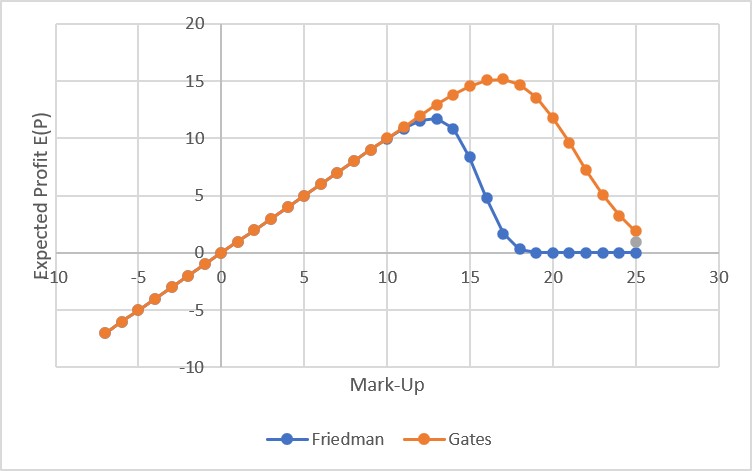
Indonesia's shipbuilding sector has significant maritime potential; yet escalating rivalry in ship docking tenders necessitates that contractors establish bid prices sufficiently low to get contracts while still ensuring a satisfactory profit margin. Research Objective: This research seeks to compute and evaluate optimal markup values and anticipated profits using the Friedman and Gates bid price strategy models to determine the best competitive model for e-procurement ship docking tenders in Indonesia. The study employs quantitative comparison analysis with finalized ship docking tender data from the LPSE Ministry of Transportation database for the years 2021 to 2023. Methodology: Following the application of selection criteria, the research examined 22 ship docking tender samples from 27 shipyard contractors, using single-normal and multi-normal distribution methods to estimate winning probabilities, optimal markups, and expected profits. Key Findings: The findings indicate that the Friedman model utilizing a multi-normal distribution yields the lowest optimal markup values, between 5% and 20%. In contrast, the Friedman single-normal distribution results in 12% to 13%, the Gates multi-normal distribution ranges from 6% to 20%, and the Gates single-normal distribution consistently maintains a value of 17%. Key Findings: Consequently, the Friedman model with a multi-normal distribution is recognized as the optimal bidding method for enhancing the likelihood of winning bids by offering a more competitive bid price. The results suggest that shipyard contractors may use past tender data and bidding models to achieve a balance between competitiveness and profitability, mitigate price uncertainty, and enhance strategic decision-making in public ship docking bids.
References
Bahman-Bijari, H. (2010). A competitive bidding decision-making model considering correlation [Master’s thesis, Ryerson University].
Ballesteros-Pérez, P., Ottaviani, F. M., & Pastor-Ferrando, J. P. (2023). Measuring the proportional hazards assumption in Gates’ bidding model. In 27th International Congress on Project Management and Engineering (pp. 40–48).
Christodoulou, S. (2004). Optimum bid markup calculation using neurofuzzy systems and multidimensional risk analysis algorithm. Journal of Computing in Civil Engineering, 18, 322–323.
Kasa, F. A., & Herzanita, A. (2021). Evaluasi metode nilai mark up harga penawaran kontraktor pada lelang elektronik untuk proyek pembangunan dan rehabilitasi gedung. Jurnal Artesis, 1, 58–67.
Kerzner, H. (2017). Project management: A systems approach to planning, scheduling, and controlling. John Wiley & Sons.
Maharani, A., Hardiyati, F., & Subagyo, A. (2021). Bidding models analysis on ship repair projects: Friedman and Ackoff & Sasieni models. Tibuana Journal of Applied Industrial Engineering, 4(2), 104–109.
Nurmala, S. (2009). Tinjauan hukum kontrak pengadaan barang dan jasa dari aspek kenotariatan [Master’s thesis, Universitas Indonesia].
Patmadjaja, H. (1999). Model strategi penawaran untuk proyek konstruksi di Indonesia. Dimensi Teknik Sipil, 1(1), 1–7.
Pemerintah Republik Indonesia. (2021). Peraturan Presiden Republik Indonesia Nomor 12 Tahun 2021 tentang Perubahan atas Peraturan Presiden Nomor 16 Tahun 2018 tentang Pengadaan Barang/Jasa Pemerintah.
Prabhamandala, R. N., Latief, Y., & Petroceany, J. S. (2014). Permodelan mark up harga penawaran kontraktor pada proses pelelangan. Universitas Indonesia.
Pujiyono, B. (2017). Konsep manajemen proyek. Manajemen Proyek ADPU4338/Modul 1.
Skitmore, R. M., Pettitt, A. N., & McVinish, R. (2007). Gates’ bidding model. Journal of Construction Engineering and Management, 1–29.
Suanda, B. (2020, November 29). Teknik estimasi biaya proyek yang efektif. Manajemen Proyek Indonesia.
Takano, Y., Ishii, N., & Muraki, M. (2014). A sequential competitive bidding strategy considering inaccurate cost estimates. Omega: The International Journal of Management Science, 42, 132–140.
Tarraza, N. C. (1985). An objective compromise approach determining the optimum mark up of a bid [Master’s thesis, Asian Institute of Technology].
Willian, E. (2022). Strategi penentuan harga penawaran pada proyek konstruksi dengan memperhitungkan faktor risiko: Studi kasus PT. Kada Mekar Sejati [Thesis, Universitas Semarang].
Published
How to Cite
Issue
Section
License
Copyright (c) 2026 Maulana Fariz Baharudin, Fitri Hardiyanti, Aditya Maharani

This work is licensed under a Creative Commons Attribution-ShareAlike 4.0 International License.
.png)

%20(4).png)
.png)
.png)
.png)


.png)
.png)
.png)