Bayesian Modeling of Monthly Upper Record Precipitation Using the Exponentiated Log Logistic Distribution: A Case Study from the Upper Indus Basin
DOI:
https://doi.org/10.63924/jau.v1i2.297Keywords:
Bayesian Modeling, Exponentiated Log Logistic Distribution, Monthly Precipitation, Upper Record Values, Upper Indus Basin, Uncertainty QuantificationAbstract
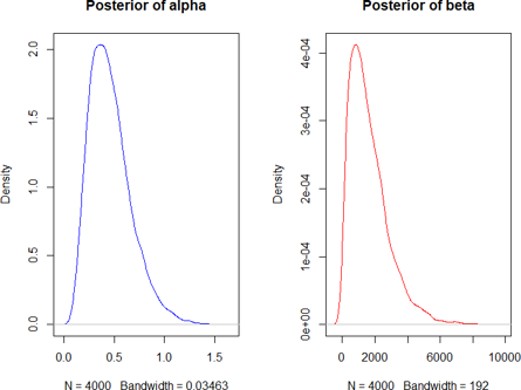
Record-breaking precipitation events represent a stochastic process that differs fundamentally from annual maxima and threshold exceedances. This study examines monthly upper record precipitation in the Upper Indus Basin (UIB) using a Bayesian framework based on the Exponentiated Log Logistic distribution (ELLD). Upper records defined as observations exceeding all previously observed values were extracted from observed monthly precipitation series spanning 1980–2020. Bayesian inference via Markov Chain Monte Carlo was employed to estimate model parameters, quantify uncertainty, and derive predictive distributions for the magnitude of the next potential upper record. Model performance and adequacy were evaluated using a combination of likelihood-based measures, posterior summaries, convergence diagnostics, and posterior predictive simulations to assess the ability of the ELLD to represent the observed record magnitudes under sparse data conditions. Exceedance probabilities for selected precipitation thresholds were derived from the posterior predictive distribution to provide an interpretable probabilistic characterization of extreme record magnitudes. Rather than relying on return periods or return levels, which are not applicable to record-based processes, the analysis adopts a predictive probabilistic framework focused on uncertainty quantification. The study is intended as a methodological illustration of Bayesian inference for record-breaking precipitation under severe data scarcity and does not attempt trend detection, attribution, or climate-change assessment.
References
Bazai, N. A., Cui, P., Hussain, T., Zhang, G. T., Wang, Y., Akhter, M. G., ... & Alam, M. (2025). Exploring the roles of recorded unprecedented rainfall-runoff characteristics and uplifted riverbeds in the catastrophic 2022 Pakistan mega flood. Advances in Climate Change Research.
Ashraf, A. (2025). Climate-induced Glacial Lake Outburst Floods and Nature-based Risk Management Approach in the Upper Indus Basin, Pakistan. Climate Change and Meteorology, (1).
Hasan, H., Hashmi, M. Z. U. R., Ahmed, S. I., Anees, M. (2025). Assessing climate sensitivity of the Upper Indus Basin using fully distributed, physically-based hydrologic modeling and multi-model climate ensemble approach. Scientific Reports, 15(1), 4109.
Gu, X., Ye, L., Xin, Q., Zhang, C., Zeng, F., Nerantzaki, S. D., Papalexiou, S. M. (2022). Extreme precipitation in China: A review on statistical methods and applications. Advances in Water Resources, 163, 104144.
Chandler, K. (1952). The distribution and frequency of record values. Journal of the Royal Statistical Society: Series B (Methodological), 14 (2), 220–228.
Goel, N. K., Rajendran, V. (2024). Modelling climate change-induced nonstationarity in rainfall extremes: A comprehensive approach for hydrological analysis. Technological Forecasting and Social Change, 208, 123693.
Sung, K., Stagge, J. (2025). Pre-Industrial and future shifts in seasonal precipita-tion climatology for large river basins across the continental USA. Environmental Research Communications.
Goel, N. K., Rajendran, V. (2024). Modelling climate change-induced nonstationarity in rainfall extremes: A comprehensive approach for hydrological analysis. Technological Forecasting and Social Change, 208, 123693.
Boumis, G. (2024). Assessing Extreme Coastal Water Levels: Statistical Models for Nearshore Flood Hazard Prediction (Doctoral dissertation, The University of Alabama).
Singha, C., Chakraborty, N., Sahoo, S., Pham, Q. B., Xuan, Y. (2025). A novel framework for flood susceptibility assessment using hybrid analytic hierarchy process-based machine learning methods. Natural Hazards, 1-46.
Mead, M. E. (2015). Generalized inverse gamma distribution and its application in reliability. Communications in Statistics-Theory and Methods, 44 (7), 1426-1435.
Glen, A. G. (2017). On the inverse gamma as a survival distribution. In Computational probability applications (pp. 15–30).
Ramos, P. L., Mota, A. L., Ferreira, P. H., Ramos, E., Tomazella, V. L., & Louzada, F. (2021). Bayesian analysis of the inverse generalized gamma distribution using objective priors. Journal of Statistical Computation and Simulation, 91 (4), 786–816.
Lin, C. T., Duran, B. S., & Lewis, T. O. (1989). Inverted gamma as a life distribution. Microelectronics Reliability, 29 (4), 619–626.
Iranmanesh, A., Vajargah, K. F., & Hasanzadeh, M. (2018). On the estimation of stress strength reliability parameter of inverted gamma distribution. Mathematical Sciences, 12, 71–77.
Metropolis, N., Rosenbluth, A. W., Rosenbluth, M. N., Teller, A. H., & Teller, E. (1953). Equation of state calculations by fast computing machines. The Journal of Chemical Physics, 21 (6), 1087–1092.
Hastings, W. K. (1970). Monte Carlo sampling methods using Markov chains and their applications. Biometrika, 57 (1), 97–109. [Note: Added for completeness; original entry was incomplete.]
Xiong, B., Zheng, S., Ma, Q., Fu, C., Wen, T., He, Z., ... Xu, C. Y. (2024). Robustness of design flood estimates under nonstationary conditions: parameter sensitivity perspective. Stochastic Environmental Research and Risk Assessment, 38(6), 2297-2314.
Basak, P., & Balakrishnan, N. (2003). Maximum likelihood prediction of future record statistic. In Mathematical and statistical methods in reliability (pp. 159–175).
Nadar, M., & Kızılaslan, F. (2015). Estimation and prediction of the Burr type XII distribution based on record values and inter-record times. Journal of Statistical Computation and Simulation, 85 (16), 3297–3321.
Zhang, B., Wang, S., & Wang, Y. (2021). Probabilistic projections of multidimen-sional flood risks at a convection-permitting scale. Water Resources Research, 57(1), e2020WR028582.